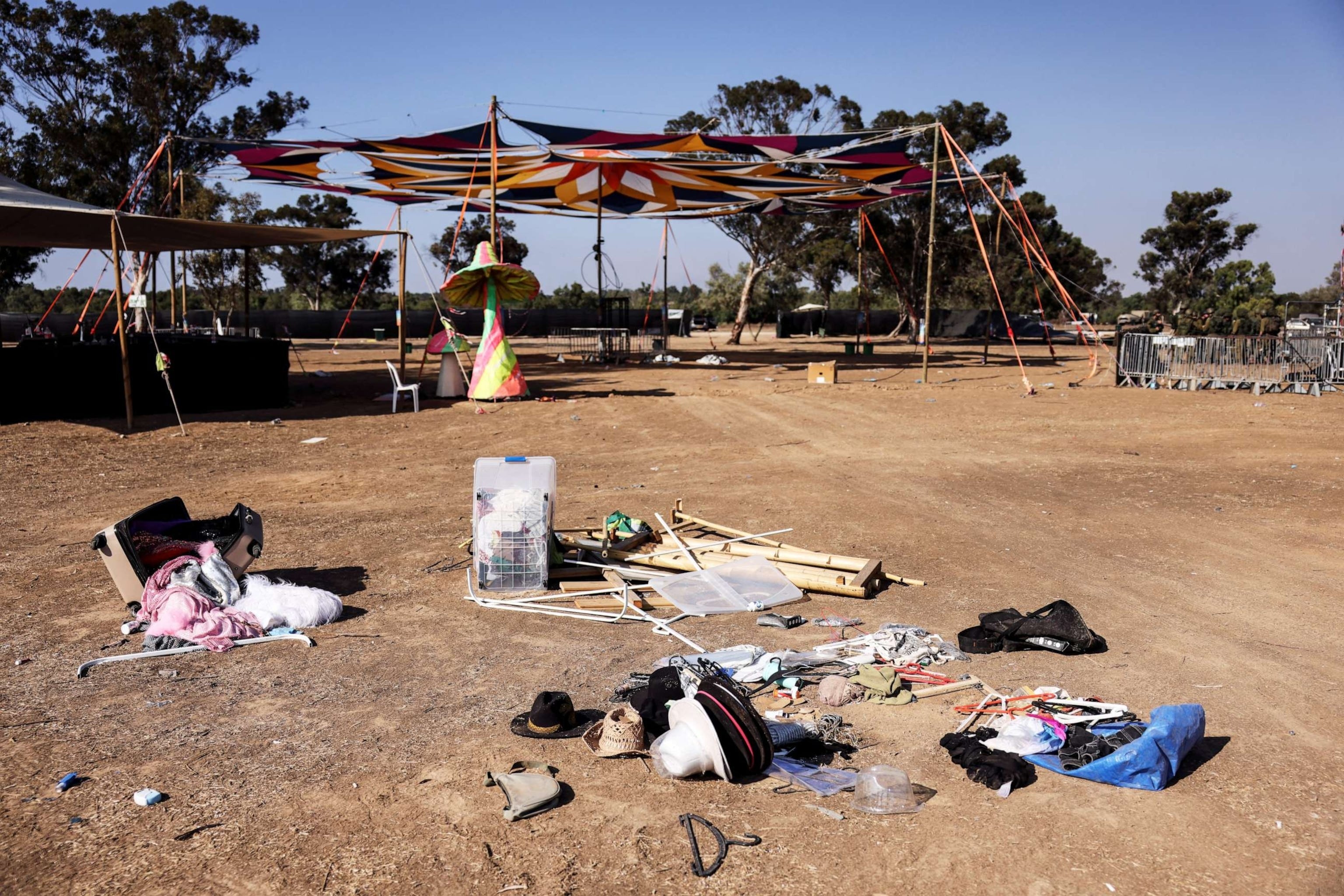
The Nova Files
What the private IDF investigation reveals about terror, heroism, failure, and one fabricated legend.

There are reports that explain, and there are reports that expose. The IDF’s internal review of what happened at the Nova festival does the latter. Finished quietly in early 2025 and shown only to relevant families, officials, and members of the media, it never reached the public. Now that a leaked copy is out, the picture is harsher than anything Israel has admitted in its brief public acknowledgments.
The deeper one reads, the more obvious it becomes that this was not a single failure and not the result of one chaotic morning. It was years of deterioration. Warnings before the attack were missed. Signals in the early hours were brushed aside. A massive open-air festival placed only minutes from Gaza was approved with almost no real defensive plan. Police and military units entered that morning with different intelligence assessments and no shared strategy. When the attack began, the fractures in the system did not widen. They split apart entirely.
Hamas arrived to find the area undefended. Roughly one hundred terrorists, armed with RPGs, heavy machine guns, and explosives, drove toward the festival in a convoy of trucks and encountered no military resistance. No rapid response team had been stationed nearby. No secured evacuation route existed. Communications between police and IDF collapsed almost immediately. Terrorists seized the roads and turned the fields around Re’im into killing grounds, while Israel’s security establishment scrambled simply to understand what was unfolding.
In the middle of this collapse, individual courage rose above institutional paralysis.
Aviv Eliyahu, the head of festival security, fought until he was killed protecting others.
Yigil Rimoni, the production manager, kept his wits while rockets and gunfire erupted and found ways to move people out.
Ilia Zborovski and Elkana Federman ran toward danger, pulling festivalgoers out of exposed areas while knowing no help was coming.
Their names deserve to endure. They acted when the state did not.
The report also recounts the stand of the police on the northern roadblock. Eleven officers died there. They faced overwhelming fire and held their position until they could not hold it any longer. A damaged IDF tank eventually reached the area. Its crew had already taken hits. The loader was killed trying to return to his position. The driver kept going anyway. This was not strategy or doctrine. It was raw human determination.
When the Givati Shaked Battalion finally reached the festival around midday, its soldiers killed roughly fifteen terrorists and began pulling survivors from the fields. They stopped the massacre, but the timing revealed how disastrously the system misjudged the crisis.
It’s important to note that most of Hamas’ Nukhba terrorists were gone by 10:10 AM according to the IDF report.
In the days that followed, as the country tried to understand what happened, some people clung to the truth. Others, however, filled the void with fiction. Among them was Rami Davidian, whose dramatic interviews spread rapidly. He said, “On my way to Re’im, I saw dozens if not hundreds fleeing. They surrounded my vehicle begging me to help.” He claimed, “I drove back and forth for four hours, rescuing 10 or 12 each time under fire and under the nose of dozens of terrorists.” He described creeping through bushes to pull people out and even claimed he impersonated a Yemeni Muslim in Arabic to distract a terrorist while rescuing a woman.
The IDF investigation includes none of this. According to the operational reconstruction, he never reached the actual massacre site. There is no record of rescues, shuttling survivors, or any of the events he described. His story disintegrates the moment it is held next to the facts.
This is not a small matter. It is a moral violation. To invent heroism in the shadow of a mass murder is to trample on the truth and on the grief of families who are still trying to understand how their loved ones died. It steals honor from those who truly fought and died. False heroism poisons the national story at the moment it most needs clarity.
These failures did not begin on October 7. They were the result of years of comfortable assumptions. Commanders convinced themselves Hamas was deterred. Intelligence units interpreted every sign through outdated theories. Israel treated the border as stable even as the threat evolved. Layer by layer, the state built a worldview that no longer matched reality. By the time the first shots were fired at Re’im, the foundations of the security system had already been weakened by years of complacency and misjudgment.
Israel has acknowledged that it failed. That acknowledgment matters, but it is only the first step. What comes next must be a harder reckoning. The guardians of the state misunderstood the threat before the attack. They failed to respond effectively during it. They left civilians, police officers, security guards, and lone soldiers to fight alone. Those who acted that morning did so without guidance and without support, relying only on instinct and responsibility.
Their courage stands in judgment of the system that abandoned them. If Israel wants to honor the dead of Re’im, it must confront the years of wrong assumptions that led there, rebuild its security doctrine, and refuse to let complacency take root again. A nation that fails to face its darkest truth risks returning to it. The memory of Re’im demands that such a failure never be repeated.